
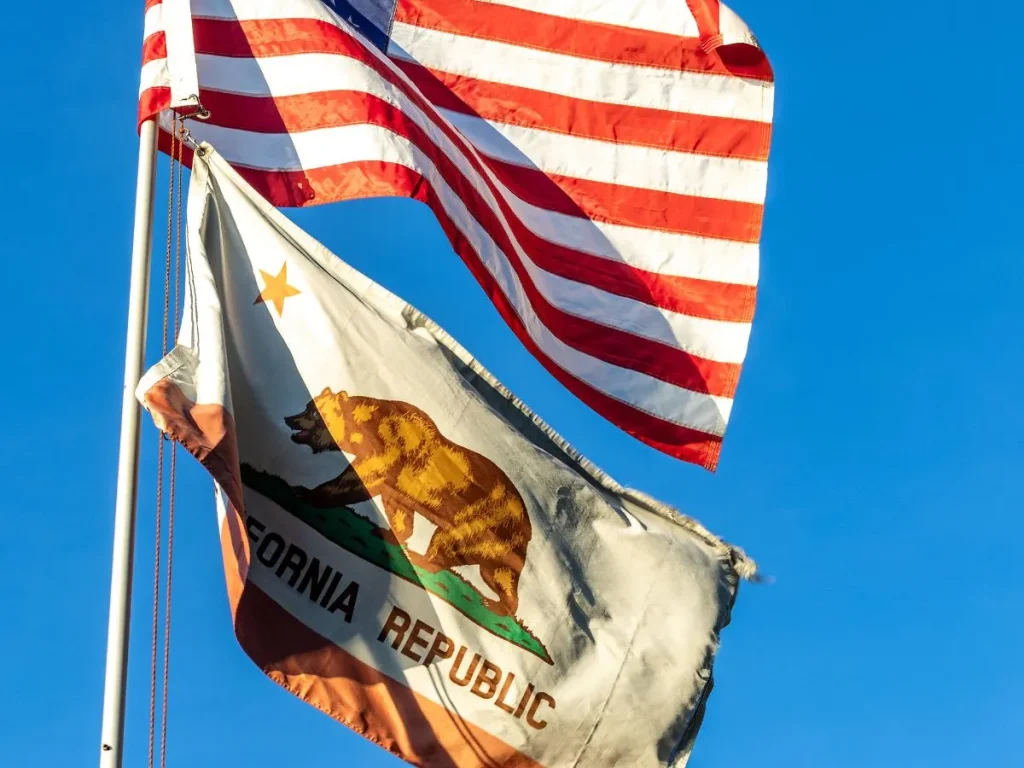
A state flag is a flag that represents a specific state within the United States. The bulk of the state flags in use today were designed around the turn of the 20th century and several states have gone through multiple flags before settling on their current incarnations. By convention, state flags are flown at state offices, usually with a United States flag. The US flag must be positioned higher than a state flag by either flying it above the state flag on a flagpole designed to accommodate two flags, or flying it on a higher flagpole if two flagpoles are used.
Each state flag is highly distinctive, and includes visual elements that are designed to convey the history, spirit, and ethos associated with the state. State symbols include the grizzly bear on the California flag, the rising sun on the Arizona flag, and the beaver on the Oregon flag. Many state flags, including those for Kansas, Maine, Florida, Idaho, and South Dakota, are decorated with the state seal.
For those interested in vexillology, the scientific study of flags, the state flags furnish a great deal of material of interest. Several states, such as California and Texas, have flags that they used during periods of independence or rebellion from the United States. The Civil War led to the development of a number of distinctive state flags in the Southern States, with the states expressing their support for secession with mottoes like “Independent now and forever,” which appears on the Alabama state flag. These flags can be seen in state archives and numerous reproductions are available in textbooks and history books.
Flags can be made from cotton and other materials. If a flag will be displayed at night and in bad weather, an all-weather design is used. An all-weather state flag will resist fading and bleeding, extending the life of the flag so that it can be displayed longer. Once a flag is no longer fit for display as a result of fading, tears, or other damage, it must be respectfully disposed of and replaced. In several states, community service organizations retire damaged flags and provide new flags free of charge.
Several states have programs similar to that adopted by the United States Capitol, allowing individual citizens to request flags that have flown over the Capitol Building. Citizens can write their lawmakers for more information. States may also fly unique flags, such as historic versions of the state flag, by special arrangement. These flags are also available as mementos.
America Explained is dedicated to providing accurate and trustworthy information. We carefully select reputable sources and employ a rigorous fact-checking process to maintain the highest standards. To learn more about our commitment to accuracy, read our editorial process.

Ever since she began contributing to the site several years ago, Mary has embraced the exciting challenge of being a America Explained researcher and writer. Mary has a liberal arts degree from Goddard College and spends her free time reading, cooking, and exploring the great outdoors.